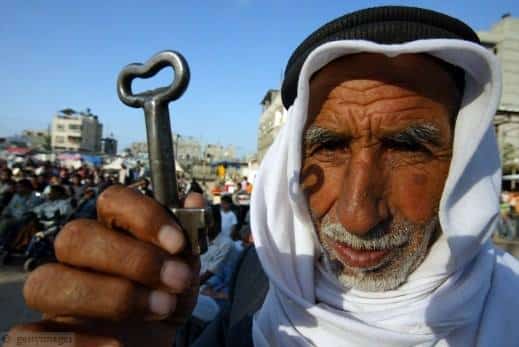
RE: Renowned Arab scholar: “Palestinians” uprooted themselves
SUBTOPIC:
※→ MartyNYC, et al,
Most people do not grasp that establishing a state is a matter of self-determination within a specific geographical boundary.
You are right on the money!
Dumbass Pestilinians uprooted themselves, as renowned Arab scholar Fouad Ajami has written. Good for them!
“The UN vote in 1947 was Israel’s title to statehood. Palestinians and Arab powers chose the path of war. Their choice was calamitous. Palestine became a great Arab shame. Few Arabs were willing to tell the story truthfully, to face its harsh verdict”
The U.N. Can't Deliver a Palestinian State
(COMMENT)
SIMPLE IDEA: ONLY the people within that particular geographic boundary may declare "Statehood." No authority outside that specific geographical boundary (including the UN) may declare statehood (external influence) • and • no authority outside that geographical boundary has the right to deny the people within the geographical boundary self-determination (external influence).
The people in the West Bank and Gaza Strip may not dictate political decisions on matters of self-determination. And there are only a fraction (less than 2%) of Palestinians (within the West Bank and Gaza Strip) that can actually claim the status of "displaced" or "refugee."
(SIDEBAR)
On the matter of the settlements, the Arab Palestinians agreed to (The Israeli-Palestinian Interim Agreement on the West Bank and Gaza Strip • Protocol Concerning Civil Affairs
) ARTICLE IV - Special Provisions concerning Area "C" wherein the Settlements are being built in Area "C" under the agreement. The Palestinians agreed to Article IV of Annex III in which Israel would maintain Full Civil and Security Jurisdiction.
Now it is internationally recognized that the agreement was made with international eyes on the proceedings and that the legitimacy was recognized - even unto the award of a Nobel Prize. However, today there are a number of Arab Palestinians
(within the West Bank and Gaza Strip) that insist that the Oslo Accords were defective and did not represent a legitimate political agreement.
This is a demonstration of just how unfaithful the Arab Palestinians
(within the West Bank and Gaza Strip) are to the commitment to peace. It further demonstrates how supportive the Arab Palestinians are to the hostile and terrorist elements within their community that consider "armed struggle" as the only solution and present the two main character flaws widely exhibited:
● The Hostile Arab Palestinians (HoAP) still attempt to confuse the issue and mask the fact that they split hairs as to the depth and meaning of armed struggle as a:
◈ Strategy
◈ Tactic
◈ Or both.
● The Hostile Arab Palestinians (HoAP) attempt to justify their violations of the Geneva Convention (GCIV) and Customary / International Humanitarian Law (IHL) as if there is a justification for Jihadism, Fedayeen Activism, Hostile Insurgency Operations, Radicalized Islamic Behaviors, and Asymmetric Violence. The HoAP operates exactly opposite to the premise that:
◈ International Peace and Security,
◈ Prevention and Removal of Threats to the Peace,
◈ Suppression of Acts of Aggression
Well, I better get off this soapbox before I fall.
Most Respectfully,
R
References (2):
internally displaced persons • In terms of the Guiding Principles on Internal Displacement, adopted by ECOSOC on 11 February 1998 (U.N. Doc. E/CN.4/1998/53/Add.2), internally displaced persons ‘are persons or groups of persons who have been
forced or obliged to flee or to leave their homes or places of habitual residence, in particular as a result of or in order to avoid the effects of armed conflict, situations of generalized violence, violations of human rights or natural or human-made disasters, and who have not crossed an internationally recognized State border’ (para. 2).
Parry & Grant Encyclopaedic Dictionary of International Law / John P. Grant and J. Craig Barker. -- 3rd ed. © 2009 by Oxford University Press, Inc. 198 Madison Avenue, New York, New York 10016 pp 284
refugee(s) • In terms of art. 1 of the Convention relating to the Status of Refugees of 28 July 1951 ( 189 U.N.T.S. 150), as amended by the Protocol of 16 December 1966, a refugee is any person who: ‘
(1) Has been considered a refugee under the Arrangements of 12 May 1926 and 30 June 1928 or under the Conventions of 28 October 1933 and 10 February 1938, the Protocol of 14 September 1939 or the Constitution of the International Refugee Organization . . .;
(2) Owing to well-founded fear of being persecuted for reasons of race, religion, nationality, membership of a particular social group or political opinion, is outside the country of his nationality and is unable or, owing to such fear, is unwilling to avail himself of the protection of that country; or who, not having a nationality and being outside the country of his former habitual residence, is unable or, owing to such fear, is unwilling to return to it’.
Parry & Grant Encyclopaedic Dictionary of International Law / John P. Grant and J. Craig Barker. -- 3rd ed. © 2009 by Oxford University Press, Inc. 198 Madison Avenue, New York, New York 10016 pp 511
.